Thought Leadership
7 eCommerce trends in Mexico for 2026 your business can't ignore
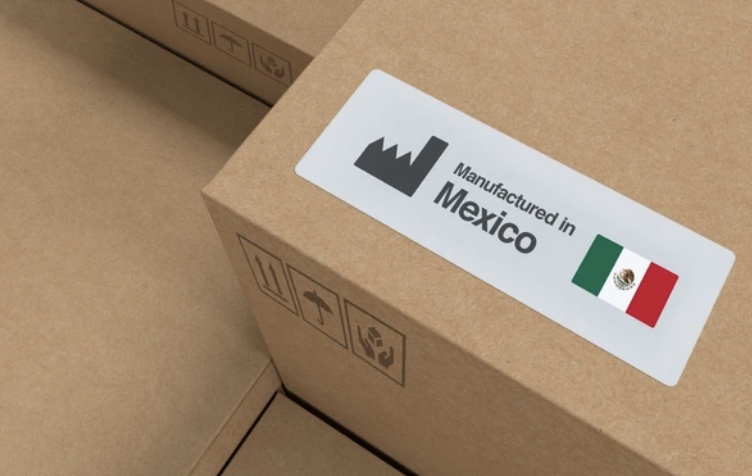
Digital commerce in Mexico is evolving fast. The market reached US$97 billion in 2024, and Statista projections place it at US$184 billion by 2027. With more than 110 million internet users and smartphone penetration exceeding 78%, Mexico is the most dynamic eCommerce market in Latin America.
But growth isn't uniform. The companies capturing most of the value are the ones adopting technology strategically, not reactively. These are the 7 trends defining Mexican digital commerce in 2026, and what your company should do about them.
1. AI as a business strategy, not an experiment
In 2025, many Mexican companies "experimented" with artificial intelligence: a chatbot here, a few recommendations there. In 2026, AI stops being an experiment and becomes a foundational layer of the commerce stack. The companies generating real results integrate AI at three levels:
- Operations: customer service automation, demand forecasting, inventory optimization.
- Shopping experience: semantic search, personalized recommendations, dynamic pricing.
- Strategy: predictive market analysis, advanced segmentation, content generation at scale.
At Edgebound we integrate AI into every layer of the stack with models from OpenAI, Anthropic and AWS. Consistent results: +43% conversion, +13% AOV. More details in our AI Commerce service.
2. Social commerce and live shopping as a real sales channel
Social commerce in Mexico grew 38% in 2025 according to AMVO data. TikTok Shop, Instagram Shopping and WhatsApp Commerce are reshaping the purchase funnel: discovery, consideration and transaction all happen on the same platform, without ever leaving the social network.
Live shopping (live streams where products are presented and sold) reaches conversion rates of 10-15%, far above the typical 2-3% of traditional eCommerce. In China it accounts for 20% of total eCommerce; in Mexico it's just beginning, but the brands starting now are capturing a competitive edge.
What you should do:
- Implement WhatsApp Commerce with an integrated catalog and payments.
- Test live shopping on TikTok or Instagram with a flagship product.
- Integrate your inventory and pricing with each social platform's APIs.
3. Real omnichannel (not just talk)
Omnichannel isn't having a web store and an app. It's letting a customer start a purchase on their phone, continue on the computer, pick up in store and return via WhatsApp, with a consistent experience and without repeating information.
In Mexico, 67% of shoppers use more than one channel during their purchase process (AMVO, 2025). Yet most brands still operate channels as silos: different inventories, different prices, different experiences. The ones that truly integrate their channels report:
- +30% in customer lifetime value (CLV).
- −25% in customer service costs.
- +20% in purchase frequency.
The technical foundation for real omnichannel is a headless architecture with unified APIs. If your backend is still a monolith coupled to a single frontend, omnichannel stays stuck in internal presentations.
4. Retail media: the third wave of digital advertising
Retail media (advertising within eCommerce platforms) is the fastest-growing digital advertising category worldwide. Amazon Ads, Mercado Libre Ads and Walmart Connect are already capturing budgets that used to go to Google and Meta.
Why? Because purchase-intent data is more valuable than browsing data. If someone searches for "Nike sneakers size 27" on Mercado Libre, the purchase intent is explicit. That's what gives retail media advertising a ROAS (Return on Ad Spend) 2-4x higher than social media.
For brands selling on marketplaces, retail media is no longer optional. For retailers with their own traffic, building a retail media program is a new high-margin revenue source.
5. B2B eCommerce: the quiet market that's exploding
While B2C grabs the media attention, B2B eCommerce in Mexico is growing at rates of 25-30% per year. Distributors, manufacturers and wholesalers are digitizing their sales processes, and discovering that B2B buyers expect the same experience they have as consumers.
The key features of modern B2B eCommerce include:
- Customer-specific catalogs with negotiated prices.
- Recurring orders and subscriptions.
- Direct integration with ERP and invoicing systems (CFDI).
- Online quotes with multi-level approval.
- Self-service for reordering and history lookup.
Platforms like BigCommerce and Commercetools have native B2B capabilities that accelerate implementation. If you sell to other companies and still manage orders by email or phone, you're leaving money on the table.
6. Sustainability as a purchase factor (not just a brand one)
73% of Mexican consumers under 35 consider sustainability when making a purchase decision (Deloitte, 2025). This is no longer greenwashing, buyers verify and penalize brands that don't deliver on their promises. The concrete actions that influence the purchase decision:
- Recyclable or biodegradable packaging with visible certification.
- Supply chain transparency (traceability).
- Shipping options with a lower carbon footprint.
- Re-commerce programs (selling used or refurbished products).
From a technical standpoint, this requires traceability modules integrated into eCommerce, carbon footprint calculators at checkout and environmental impact dashboards. It's not just marketing, it's engineering.
7. MACH architecture as a competitive advantage
The most technical trend on the list, but possibly the most decisive in the long run. Companies operating on MACH architectures (Microservices, API-first, Cloud-native, Headless) iterate faster, scale better during demand spikes and have the freedom to adopt any of the previous trends without depending on a single vendor.
In the Mexican ecosystem, MACH adoption is moving from early adopters to mainstream. The signals are clear:
- MACH-certified platforms (Commercetools, BigCommerce) are growing in adoption rate across LATAM.
- Systems integrators are building MACH practices (Edgebound has 38+ projects).
- Enterprise companies are demanding open APIs as a requirement in their RFPs.
If you want to assess your current stack against these standards, our gives you a diagnosis in 2 weeks.
What to do now?
You don't need to adopt all 7 trends at once. The practical recommendation:
- Short term (Q3 2026): assess your current architecture. If you're on a monolith, start the conversation about headless. Implement at least one AI use case (recommendations or chatbot).
- Medium term (Q4 2026 – Q1 2027): integrate WhatsApp Commerce if you don't have it yet. Evaluate retail media if you sell on marketplaces. Begin the migration to headless if you already have the business case.
- Long term (2027): consolidate your MACH architecture. Integrate AI as a cross-cutting layer. Build real omnichannel capabilities with unified data.
Frequently asked questions (FAQ)
How much is the eCommerce market in Mexico worth in 2026?
The eCommerce market in Mexico reached US$97 billion in 2024, and Statista projections place it at US$184 billion by 2027. Mexico is the largest digital commerce market in Latin America, with more than 110 million internet users and smartphone penetration above 78%.
What are the main eCommerce trends in Mexico for 2026?
The 7 key trends are: (1) AI as a business strategy, (2) social commerce and live shopping, (3) integrated omnichannel, (4) retail media, (5) B2B eCommerce, (6) sustainability as a purchase factor, and (7) MACH architecture as a competitive advantage.
What is social commerce and why is it relevant in Mexico?
Social commerce is selling products directly within social networks (TikTok Shop, Instagram Shopping, WhatsApp Commerce). In Mexico it grew 38% in 2025 according to AMVO. It's relevant because discovery and transaction happen on the same platform, with live shopping conversion rates of 10-15% vs. 2-3% for traditional eCommerce.
What is retail media and how does it benefit brands?
Retail media is advertising within eCommerce platforms (Amazon Ads, Mercado Libre Ads). It has a ROAS 2-4x higher than social media because it's based on explicit purchase-intent data. For retailers with their own traffic, building a retail media program is a high-margin revenue source.
How can a Mexican company start implementing these trends?
The recommended approach is gradual: in Q3 2026, assess your current architecture and implement an AI use case. In Q4 2026, integrate WhatsApp Commerce and evaluate retail media. In 2027, consolidate the migration to MACH and integrate AI as a cross-cutting layer. A good starting point is a technical Health Check to size the gaps.
Want to bring these trends into your business?
Explore our AI Commerce and MACH Architecture services, or book a session with Roman Torres to review your 2026 roadmap.